

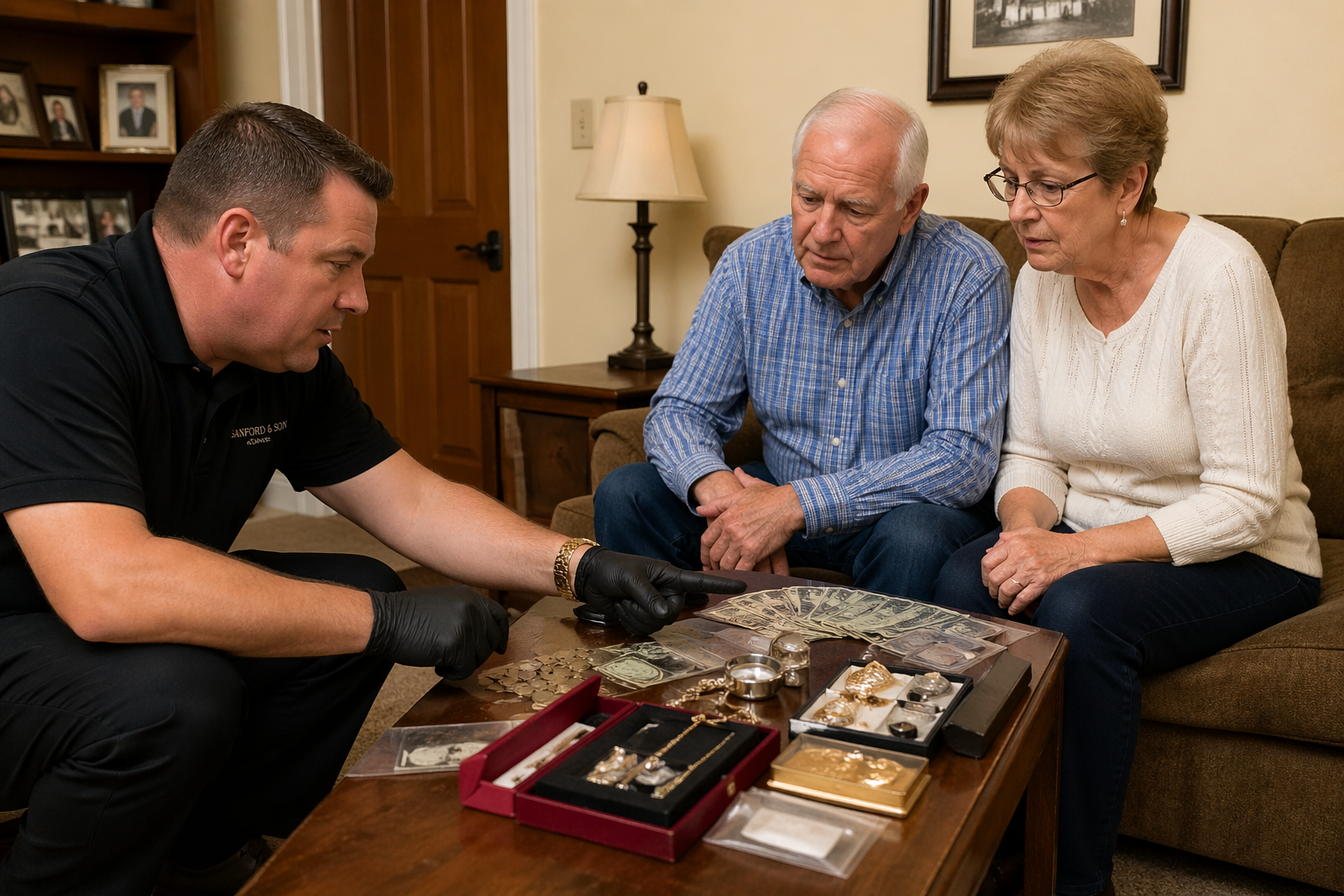
We hear a version of this question almost every time someone contacts us for the first time:
"I've never done anything like this before. I'm not sure what I have. I don't really know what to expect. Is this going to be weird?"
It's not weird. It's actually one of the more straightforward transactions most Maryland families ever make — and one of the least stressful, once you know what to expect.
The hesitation is completely understandable. Inviting someone into your home to evaluate and potentially buy your belongings touches on something personal. You may be dealing with items from a loved one's estate. You may have no idea what anything is worth and worry about being taken advantage of. You may simply feel uncomfortable not knowing exactly how the process works.
This post is designed to remove all of that uncertainty. Here is exactly what happens during a Sanford & Son home visit — from the first phone call to the moment we leave — in plain, specific language. No surprises.
Step 1: The Phone Call or Contact Form
Everything starts with a single call, text, or message through our contact form at sanfordandsoncoins.com/contact-us.html.
You don't need to have a detailed inventory ready. You don't need to know what anything is worth. You don't even need to know exactly what you have. What's helpful at this stage is a general sense of what you're looking to sell — "I inherited a coin collection," "I have some gold jewelry and silver flatware," "my parents left behind a house full of stuff and I'm not sure where to start" — so we can give you a realistic sense of what to expect from the visit and roughly how long it will take.
We schedule appointments seven days a week, from 7am to 7pm, across all of Maryland. We work around your schedule. If you're managing an estate on a tight timeline, we can often accommodate same-week visits. If you need evening or weekend time, that's available too.
What you don't need to do before calling: organize everything, research prices, clean anything, or prepare any kind of presentation. That's our job, not yours.
Step 2: Preparing for the Visit (Less Than You Think)
The most important thing you can do before we arrive is simply gather the items you'd like us to look at into one general area — a table, a countertop, a cleared-off space in a bedroom or living room. You don't need to sort by category or clean anything up.
A few specific things worth doing:
Pull out any coins you find — in drawers, in jars, in old mint tins, in safe deposit boxes, in coin folders or albums. Even loose change sitting in a jar deserves a second look. Pre-1965 U.S. dimes, quarters, and half dollars are 90% silver and worth significantly more than face value at today's precious metal prices.
Gather all jewelry together, even pieces you think are broken, tarnished, mismatched, or costume. Broken gold chains still have melt value. A piece that looks like costume jewelry might be stamped 14K on the inside of the clasp. Nothing should be thrown out before it gets looked at.
Locate any silverware, serving pieces, or flatware sets. Look on the back of pieces for "Sterling" or "925" markings. Silver-plated pieces are less valuable but still worth checking.
Don't clean anything. This applies especially to coins. Magnification at 5x to 10x reveals what naked eyes miss — hairlines from old cleanings, contact marks, and subtle wear. Natural toning that develops over decades can enhance value. Germania Mint Archives A coin that looks tarnished to you may look exactly right to a numismatist. Cleaning it, even gently, can permanently reduce its value.
Bring out any documentation you have. Original receipts, certificates of authenticity, original boxes for watches or jewelry, coin folders with labels — all of these help tell the story of a piece and can support a higher offer.
Step 3: We Arrive
When our buyer arrives at your door, the first thing you'll notice is that this isn't a high-pressure sales situation. We're not here to rush you, overwhelm you with jargon, or make you feel like you need to decide anything on the spot.
We'll introduce ourselves, take a brief walk through to understand the scope of what you have, and get set up at a workspace — usually a kitchen table or dining room table with good light. We bring the equipment we need: a jeweler's loupe, precision scales, a reference library of pricing guides, and tools for testing metal purity. You don't need to provide anything except the items themselves.
From this point, the evaluation begins — and this is where most people are pleasantly surprised by how much they learn.
Step 4: The Coin Evaluation
Coins are evaluated through a combination of visual inspection, reference checks, and — where relevant — magnification.
The first pass is a general sort. We separate coins into categories: U.S. silver coins, gold coins, collectible series coins, foreign coins, and modern pocket change. That initial sort alone often surfaces surprises. A mason jar of old change might contain a handful of pre-1965 silver quarters worth $5–6 each based on current silver prices alone.
For anything that warrants a closer look, we use a jeweler's loupe — typically magnifying at 5x to 10x — to examine the coin's surface. Professional graders evaluate several key factors: strike quality, or how well and sharply the coin's design was struck at the mint; surface imperfections like scratches, marks, or damage; luster, meaning the coin's brilliance or reflective quality; and eye appeal, the overall visual attractiveness of the coin. JM Bullion
We're assessing condition using the Sheldon Scale, the universal numismatic grading system. The Sheldon Scale is a 70-point system where a coin graded Poor-1 is barely identifiable, while Mint State 70 is considered perfect — fully struck and lustrous with no visible marks even under magnification. What makes grading so consequential is that seemingly small differences in grade can produce enormous differences in price. Bullion Trading LLC
We're also checking the date and mint mark combination on each coin — the small letter stamped on the coin that identifies which U.S. Mint facility struck it. These two details together determine a coin's "variety," and certain varieties are dramatically more valuable than others. A Morgan silver dollar from one mint and year might be worth $40. The same design from a different mint in a different year might be worth $4,000.
For any coin in an NGC or PCGS certified holder (the tamper-evident plastic slabs you may have seen), we note the grade and look up current market comparables. NGC and PCGS provide third-party authentication and their grades are backed by financial guarantees, which means certified coins trade with far more market confidence than ungraded "raw" coins. Global Coin A certified coin's value is more defensible and easier to price accurately.
Throughout this process, we explain what we're seeing. If a coin is common, we'll tell you why. If something is worth setting aside for a closer look, we'll tell you that too. Nothing is evaluated in silence.
Step 5: The Jewelry Evaluation
Gold, silver, and estate jewelry is evaluated on the spot using a combination of visual inspection, hallmark reading, and metal testing.
Identifying the metal: The first step is reading the hallmarks — the small stamps pressed into jewelry that indicate metal content. Gold appraisal is based on karat purity (10K, 14K, 18K, or 24K) and weight. A silver appraisal assesses whether an item is fine silver (.999), sterling silver (.925), or a lesser alloy. Top Vegas Buyer For pieces where the hallmark is worn or unclear, we use electronic testing tools that accurately measure metal purity without damaging the piece.
Weighing: Precious metal jewelry is weighed on precision digital scales. Weight combined with karat purity determines the melt value — the baseline floor of what a piece is worth regardless of any other factor.
Gemstone evaluation: For pieces with diamonds or colored stones, we use a jeweler's loupe to examine cut, clarity, and condition. A buyer will use a diamond tester to confirm the stone is a genuine diamond, then use a jeweler's loupe to examine the Four Cs: cut, the quality of the diamond's angles and facets; color, graded on a scale from D (colorless) to Z; clarity, the presence of internal flaws or external blemishes; and carat weight, the physical weight of the diamond measured in carats. Hjcoinsandjewelry
Beyond melt value: We also look at a piece's collector or estate value — its design, maker's marks, age, and style. A piece of Art Deco platinum jewelry or a signed Victorian brooch may be worth significantly more than its metal content alone. Vintage and antique jewelry from recognized periods or makers commands premiums that a simple scale reading wouldn't capture.
We explain our reasoning on each piece. You're not receiving a number pulled from thin air — you're receiving an explanation of exactly how we arrived at that number.
Step 6: Collectibles, Antiques, and Other Estate Items
In addition to coins and jewelry, Sanford & Son evaluates a wide range of collectibles, antiques, and estate contents. This includes:
- Sterling silverware and flatware sets — evaluated by weight, maker, and pattern
- Vintage watches and pocket watches — examined for maker, movement type, and condition
- Sports memorabilia — cards, autographs, game-worn items, and vintage equipment
- Military medals and insignia — U.S. and foreign, evaluated for rarity and condition
- Vintage toys and collectibles — evaluated based on maker, condition, and current collector demand
- Antique furniture hardware and decorative items — evaluated for age, maker, and condition
- General estate contents — anything that might have monetary value beyond its obvious use
The evaluation process for these categories follows the same principle as coins and jewelry: we look at what an item actually is, what condition it's in, what comparable items have recently sold for, and what we're able to offer based on current market demand. We don't guess. We reference real market data.
Step 7: The Offer
Once we've worked through everything, we'll present you with an offer. Here's what that looks like in practice:
We'll go through what we'd like to purchase and explain the basis for each price. Current silver spot price times the silver content for pre-1965 coins. Karat weight times current gold price for jewelry. Numismatic premium above melt for any key-date or high-grade coins. Collector market value for estate pieces where demand exceeds melt.
The coin appraisal should not only be free of charge, but it should also be a no-obligation evaluation. Even if you get the slightest hint that the motives of the coin dealer you're working with may not be sincere, you're best moving on until you find a coin dealer you're comfortable with. Atlanta Gold and Coin Our visit costs you nothing, and accepting our offer is entirely your decision. There is no pressure. No countdown clock. No "this offer expires when I walk out the door."
If you want time to think, take it. If you want a second opinion on a specific piece before deciding, we respect that. If you want to sell some items and hold others, that's completely fine — we don't require you to sell everything or nothing.
If you accept our offer, we pay you in cash on the spot. The transaction is complete before we leave your home.
Step 8: We Leave
That's it. No follow-up pressure. No strangers coming back. No items to ship, no eBay disputes to navigate, no Craigslist meetings to schedule. The transaction is done, and you walk away with cash in hand and clarity about what you had.
Most visits take between 45 minutes and two hours depending on the size and scope of what we're evaluating. A single coin collection might take 30 minutes. A full estate with coins, jewelry, silverware, and collectibles might take most of an afternoon. Either way, we take the time to do it properly.
Who You're Dealing With
Sanford & Son is licensed, bonded, and insured. We're a member of the Numismatic Guaranty Company (NGC) — the same professional organization whose grading standards govern the numismatic industry. Coin grading by NGC is a team effort, with at least two professional numismatists examining every coin to authenticate and grade each coin. NGC Our membership in that organization reflects the level of professional knowledge and ethical standards we hold ourselves to.
We've been buying coins, jewelry, collectibles, and estate contents from Maryland families for years. We're not a pawn shop operating on a loan-spread model, and we're not a stranger from Facebook Marketplace. We're a professional buying service with real accountability, real credentials, and a genuine interest in giving you a fair offer — because our reputation in Maryland depends on it.
Ready to Schedule a Visit?
If you have coins, jewelry, collectibles, or estate items to sell anywhere in Maryland, we'd love to come take a look. No obligations, no pressure, and no surprises.
📞 Call or text: (410) 746-5090 Open 7 days a week, 7am–7pm
🌐 Contact us online: sanfordandsoncoins.com/contact-us.html
One call. One visit. Fair offer. Cash in hand.
Frequently Asked Questions
Do I need to organize or sort my items before you arrive?
No. Gathering everything into one general area is helpful, but you don't need to sort by category, research prices, or present anything in a particular way. Part of what we're there to do is help you understand what you have — and that process works best when we're starting from scratch alongside you, not reviewing a pre-sorted inventory.
How long does a home visit typically take?
It depends on the scope. A single coin collection or small jewelry lot might take 30–45 minutes. A full estate with coins, jewelry, silverware, collectibles, and miscellaneous items could take two to three hours. When you call to schedule, we'll give you a realistic estimate based on what you describe.
Is there any cost for the visit or the appraisal?
No. The visit is completely free, and the evaluation carries no obligation to sell. We're in the business of making offers and buying items — the appraisal is part of that process, not a separate service we charge for.
What if I'm not ready to sell everything — can I sell just part of what you look at?
Absolutely. You're never obligated to sell everything we evaluate. Some people want to sell one specific item they've been meaning to move. Others want us to evaluate a full estate and make an offer on everything. We're flexible — sell what you want to sell, and keep what you want to keep.
How do you determine the price you offer?
We work from real market data. For silver coins, the basis is the current silver spot price multiplied by the silver content of the coin, plus any numismatic premium for coins with collector value above melt. For gold jewelry, it's karat weight times current gold price. For collectibles and estate items, we reference current auction comparables and dealer market data. We explain our reasoning on each item so you understand exactly how we arrived at our number.
What if I think your offer is too low on a specific piece?
You're always free to decline on any item — there's no pressure and no obligation. If you have a specific concern about a particular piece, tell us. We're happy to walk through our reasoning in more detail, and if there's information we haven't considered — a certificate of authenticity, a documented provenance, an NGC slab grade — we absolutely want to know. Our goal is a transaction you feel good about, not a rushed sale at an unfair price.
Do I need to be present for the entire visit?
It helps to be present throughout, especially when we're working through collections that span multiple rooms or categories, since we may have questions about the history of specific items that could affect their value. If you need to step away at any point, that's fine — but we'd ask that someone be present who can make decisions about what to sell.
What happens to items you don't make an offer on?
We'll tell you what we think those items are, what they might be worth, and what your best options are for selling them — whether that's a different type of specialist, a donation, or another avenue. We won't just leave you with a pile of unknowns. If we can't buy something, we'll at least help you understand what it is.
Is my home safe during the visit?
Yes. Sanford & Son is licensed, bonded, and insured. Our buyers are professionals representing a legitimate, accountable Maryland business — not anonymous respondents from a classified ad. We're here to evaluate and purchase your items, not to case your home. Every visit is conducted with the same care and respect we'd want shown in our own family's home.
Can you come back if I find more items after the first visit?
Of course. It's common for people to discover additional items while sorting through a home, especially during an estate cleanout. If you find more coins, jewelry, or collectibles after our first visit, just give us a call and we'll arrange a follow-up.
